
Machinery · Start-up lines
Microfiber converting machinery, supplied by the people who run it
For overseas customers building their own converting capacity: the machines, the raw material and the commissioning, specified against a line we run every day — not a catalogue package assembled by a trader.
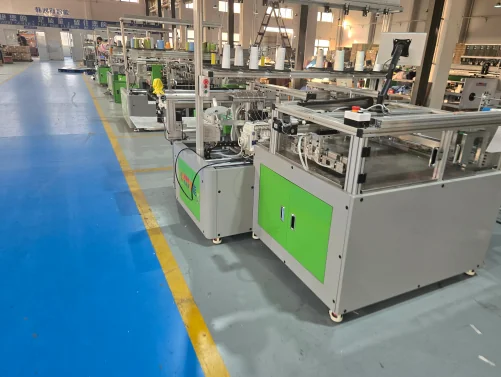
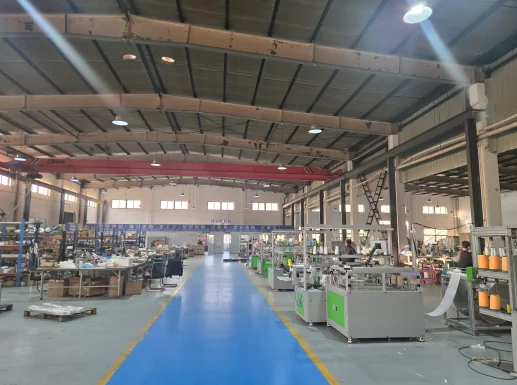
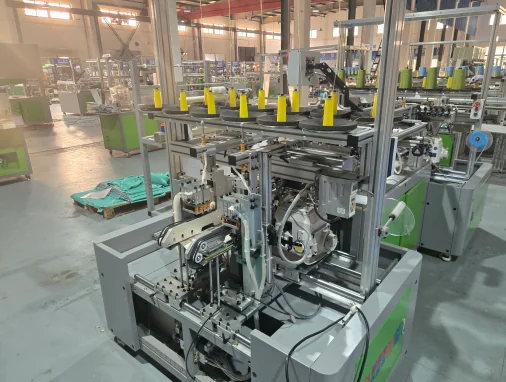
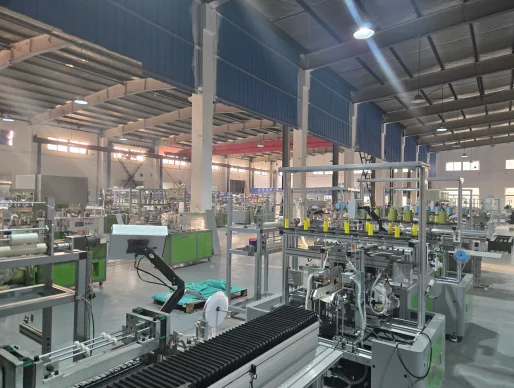
Photographed in our machinery works · 2026-11-22 · Reviewed 2026-11-25
The short answer. We build and supply the converting line for microfiber cloth — slitting and head cutting, first overlock, automatic overlock, manual overlock for custom shapes, template sewing, ultrasonic sealing, perforating and packing — together with the bicomponent yarn and cloth those machines are set for. Installation, commissioning, operator training and the process documentation are part of the supply, because the same team runs our own production line.
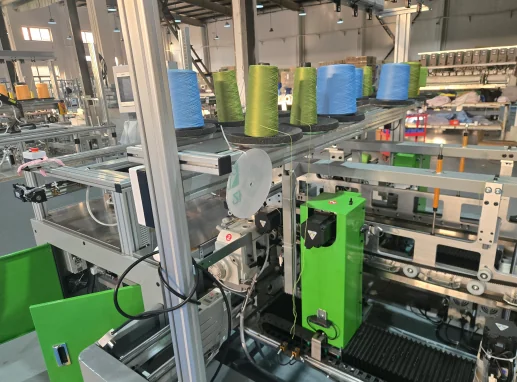
The line we supply
Each machine is quoted against the product you intend to make. If a machine is not needed for your product mix, we will say so rather than include it.
| Machine | What it does | Why it matters |
|---|---|---|
| Slitting and head cutting | Cuts the dyed roll at the head and slits it to finished width. | Sets the edge position that every later stage works to. |
| First overlock line | Closes both edges of the continuous strip before pieces are separated. | Keeps stitch density identical across a whole run. |
| Automatic overlock stations | Cuts to length and closes the end edges automatically. | Holds the stitch count per inch on the thousandth piece as on the first. |
| Manual overlock positions | Closes custom and irregular outlines by hand. | The only route for shaped wipes and contoured items. |
| Template sewing machines | Sews a jig-held path for pockets, quilting and shaped seams. | Makes repeated shapes identical piece to piece. |
| Ultrasonic sealing line | Cuts and fuses in one pass: straight edge, wave edge or hot overlock. | Thread-free edge for glass cloths and retail programmes. |
| Perforating and packing line | Slits, perforates and bags a tear-off roll in one pass. | Roll stays under tension from first cut to sealed bag. |
| Packing stations | Counts, bags, barcodes and cartons per the purchase order. | Retail compliance is decided here, not at the loading dock. |
What is included
| Item | What it covers |
|---|---|
| Machinery | The line configured to the products you intend to make, not a catalogue package. |
| Raw material | Bicomponent yarn and greige or split cloth, matched to the machines we are supplying. |
| Installation and commissioning | Our technicians on site until the line runs at the agreed output. |
| Operator training | Run alongside the line, on your material, before we leave. |
| Process documentation | The same stage-by-stage record published on our manufacturing page, written for someone who has to run the line. |
| Spares and support | Critical spares identified at handover, with a named contact for the first year. |
Why a factory sells better machinery than a trader
A machine supplier who has never run a converting line cannot tell a customer which overlock setting suits which cloth, or why a seal that looks correct cracks after washing. Those answers come from production, not from a catalogue.
It is also why our process documentation is detailed enough to be useful: it was written for customers who have to run the line themselves. The stage-by-stage record on our manufacturing page is the same material we hand over at commissioning.
How an order runs
| Step | What happens | |
|---|---|---|
| 01 | Enquiry | What you intend to make: cloth format, GSM range, edge type, pack format, target output. |
| 02 | Line proposal | Which machines are needed for that product mix, and which are not — we will tell you what to leave out. |
| 03 | Material trial | Sample cloth run on our own line, at your specification, so the machine setting has a reference. |
| 04 | Quotation | Machine list, material supply, installation scope and lead time, itemised. |
| 05 | Factory acceptance | The line assembled and run in our works before it is packed. |
| 06 | Shipment and commissioning | Installation, commissioning and operator training at your site. |
Questions buyers ask about the line
Do you supply the machines on their own, or only as a package?
Both. Most start-up customers take the converting line plus the raw material, because the two have to match: a machine set for one cloth weight behaves differently on another. Customers who already buy material elsewhere can take the machinery alone.
Which machines does a start-up actually need?
It depends on the product. A programme of plain rectangular cloths needs slitting, an overlock line and packing; adding ultrasonic edges or tear-off rolls adds two more machines and changes the layout. We propose the line from your product list rather than selling the full catalogue.
Can you train our operators?
Yes. Training runs alongside commissioning, on your material, before handover. The stage-by-stage documentation published on this site is the same material we use in that training.
What is the lead time?
It depends on the machine mix and on whether the line has to be built to order. The itemised quotation states the lead time per machine, so you can see what is driving it.
Send the product you intend to make — format, GSM range, edge type, pack format and target output — and we will propose the line, and the machines to leave out, within one business day.